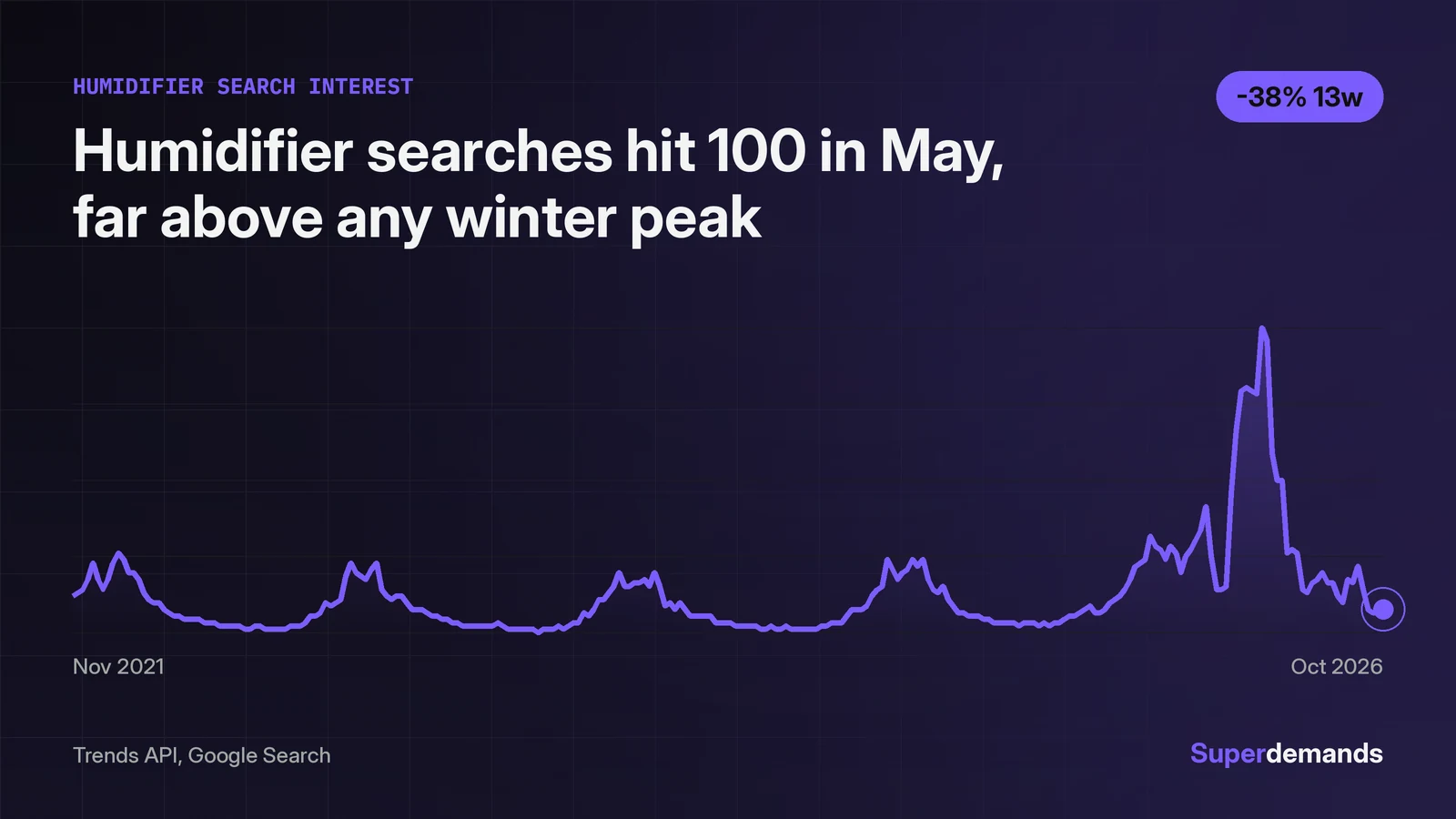
Demand for humidifiers is not rising right now. Search interest sat at 15 on the 0 to 100 Google Search index in the week of October 24, 2026, down 37.5% over three months and 21.05% over twelve months, with October readings holding at 14 to 15 all month. That flat autumn level comes after a strange year. For five years every yearly peak landed in December or January, between 26 and 37, until May 2026 broke the pattern with an eleven-week run above the old winter ceiling, peaking at 100, about 2.7 times any earlier yearly peak. No clear cause for that surge turned up in a web search, so it stays an unexplained anomaly in this piece. The honest read is to wait for December, when the usual winter peak should show whether the May surge changed anything.
Five winters peaked in December or January, then May broke the pattern
The long run is a steady winter story. Across 260 weekly readings from November 6, 2021 to October 24, 2026, the highest week of each year fell in December or January in every year except 2026, and the peaks stayed in a narrow band. The yearly maximums tell the story in one table.
| Year | Peak index | Peak week |
|---|---|---|
| 2021 | 29 | December 4 |
| 2022 | 32 | January 8 |
| 2023 | 26 | December 2 |
| 2024 | 30 | December 7 |
| 2025 | 37 | December 6 |
| 2026 | 100 | May 9 |
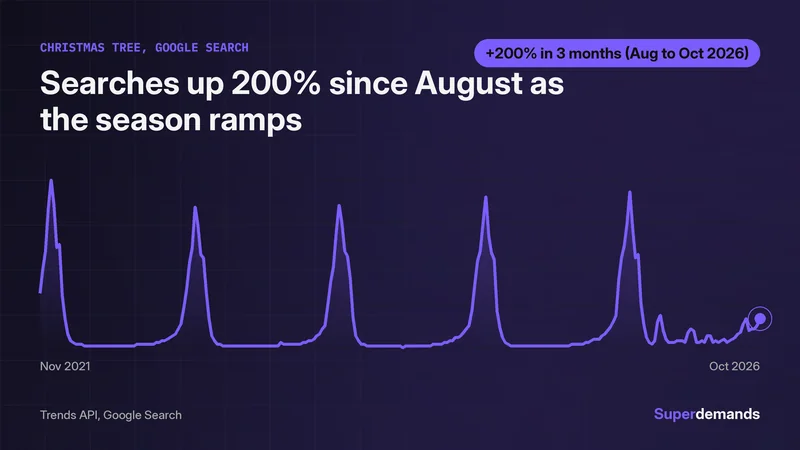
The 2025 peak of 37, on December 6, was the highest December reading in the series. Winter 2026 then broke the old ceiling twice before May: 39 in the week of February 14 and 46 in the week of February 21, above the December 6 peak of 37. The February 21 reading of 46 was the strongest winter week on record before May, and it still sat just below half the May peak. For five years, the pattern was plain: demand climbed through autumn, topped out around the turn of the year, and faded by spring. The head term "humidifier" carries 673,000 monthly searches in Keyword Planner, so the pattern rests on a large base, not a thin tail of queries. A close seasonal cousin with the same winter shape is Christmas tree demand.
The May surge ran eleven weeks and no cause is on record
The surge was fast, high and short. Readings stayed above the old winter ceiling of 37 for eleven straight weeks, March 28 to June 6, climbing 50, 69, 81 and 82 through April 18, then 81 on April 25, 80 on May 2, 100 on May 9, 96 on May 16, 62 on May 23, 54 on May 30 and 54 on June 6. The cause is not established. A web search found no clear driver for the surge, and this piece does not guess at one. No wildfire season, viral post or product launch is named here, because none was verified. A spike with no verified cause is a fact about the data, not a fact about the world, and it should be read that way until a cause turns up.
October sits at the seasonal low heading into the winter window
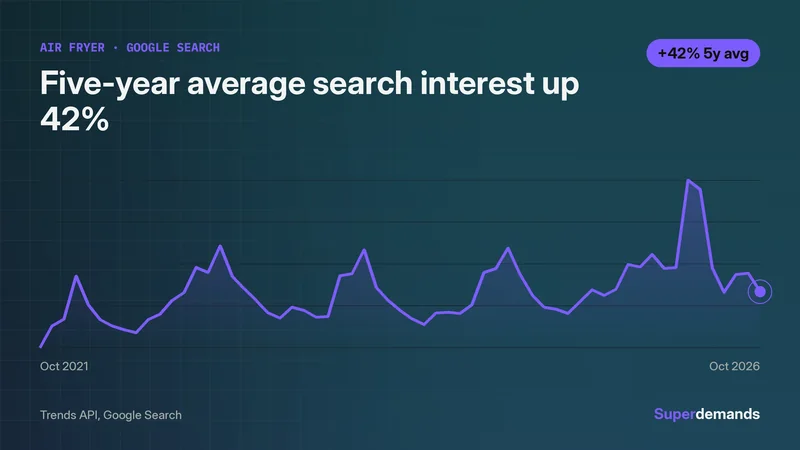
Current interest is at its seasonal low. Readings for October 2026 were 15 on October 3, 14 on October 10, 14 on October 17 and 15 on October 24, flat across the month and close to the 2026 summer low of 17, reached in the week of August 29. The three month change is minus 37.5%, from 24.0 in the week of July 25 to 15.0 in the week of October 24, and the twelve month change is minus 21.05%, from 19.0 in the week of October 25, 2025. Both declines say the same thing: the May surge is gone from the numbers, and demand is back where autumn usually finds it, at the bottom of the yearly cycle. The same low autumn base shows up in other seasonal home products, such as air fryer demand, where the question is also whether the winter lift arrives on schedule.
What the December reading will settle
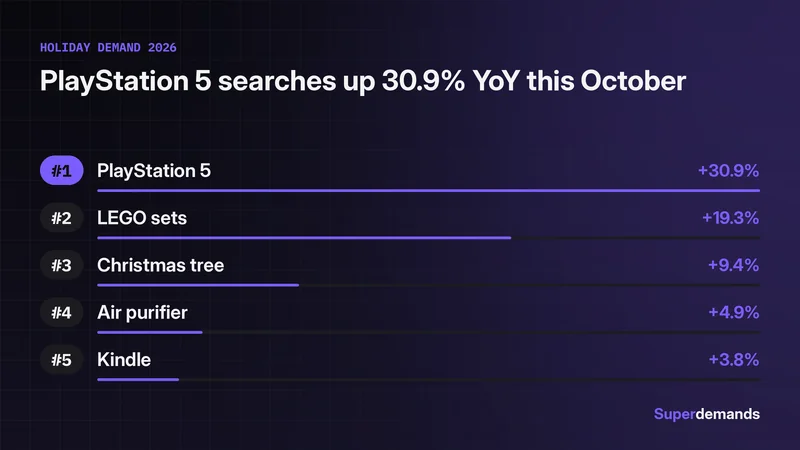
December is the test that matters. If the winter peak lands in the usual 26 to 37 band, the May surge reads as a one off spike that left the seasonal pattern intact, and the long run story stays a winter category with a flat autumn base. If December prints well above 37, past the 46 of February 2026, that points to a higher winter ceiling and a category that may have gained lasting buyers from the May surge. A buyer or seller who acts now, in October, is acting on the lowest readings of the year, with no evidence yet about which December arrives. The 2026 holiday demand calendar puts this window in the wider seasonal picture. Until the December numbers land, the data supports patience, not a call in either direction.